
- January 11, 2026
- 4:32 pm
Edit checks and system‑generated queries play a critical role in modern clinical trial data management. When thoughtfully designed and properly utilized, they can significantly reduce the need for manual queries, improve data quality, and streamline trial operations. However, not all edit checks are created equal, and their true value lies in how well they reflect the real‑world nuances of clinical data.
Why Edit Check Strategy Matters
In many studies, edit checks are implemented to meet protocol or system requirements but may not be fully optimized for how data are actually generated, entered, or interpreted. Poorly designed checks can lead to excessive manual queries, missed inconsistencies, or unnecessary burden on sponsors and data management teams.
Our Edit Check Evaluation Service focuses on ensuring that your study’s edit checks are not only technically correct, but also fit for purpose, supporting accurate, efficient, and meaningful data review.
A Closer Look at Local Lab Nuances
One area where edit checks often fall short is local laboratory data. Unlike central labs, local lab testing introduces variability in reference ranges, methodologies, and reporting practices. These nuances require more thoughtful validation approaches than one‑size‑fits‑all edit checks.
For example:
- Lab values may be measured using different analytic methods
- Units may vary across sites or regions
- Certain tests have clinically dependent relationships that are not always validated together
Standard edit checks may flag values independently, but fail to recognize clinically meaningful relationships between results.
Customizing Edit Checks for Smarter Data Validation
Our team brings therapeutic insight and practical data management experience to the evaluation of your edit checks. We assess whether existing checks are:
- Clinically appropriate
- Operationally feasible
- Aligned with protocol requirements
- Targeted toward meaningful data integrity risks
When needed, we recommend customized edit checks that account for known data relationships and site‑level nuances.
Real‑World Example: Bilirubin Calculations
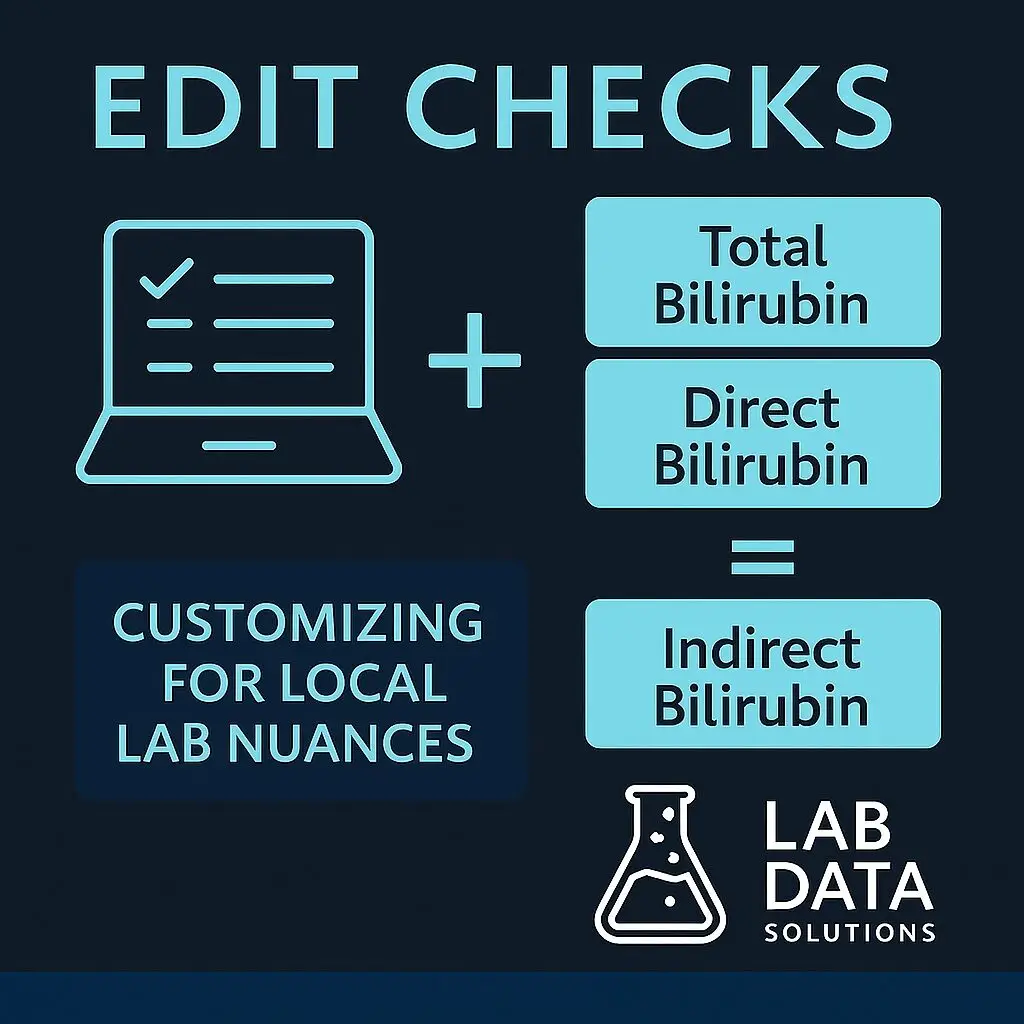
Consider the relationship between Total Bilirubin, Direct Bilirubin, and Indirect Bilirubin, a common area where discrepancies may be overlooked.
A smart, customized edit check can:
- Calculate Indirect Bilirubin from Total and Direct Bilirubin values
- Compare the calculated result to the entered value
- Trigger a targeted query only when the values fall outside an acceptable tolerance
This approach helps ensure data accuracy while avoiding unnecessary queries, especially when local lab practices differ.
Our Edit Check Evaluation Approach
When you engage our Edit Check Evaluation Service, our team will:
- Review study‑specific edit checks and system queries
- Assess test requirements and operational feasibility
- Perform risk‑based evaluations to identify gaps or redundancies
- Recommend enhancements tailored to your study’s design and data sources
- Ensure edit checks are utilized to their fullest potential
The result is a more efficient data cleaning process, improved data confidence, and reduced downstream reconciliation effort.
Enhancing Data Quality Without Adding Complexity
Optimized edit checks should work with your study, not against it. By aligning checks with real‑world data nuances and clinical logic, sponsors and data managers can reduce noise, focus on true issues, and accelerate decision‑making.
If you’re unsure whether your current edit checks are delivering maximum value, our team is here to help you take a closer look.